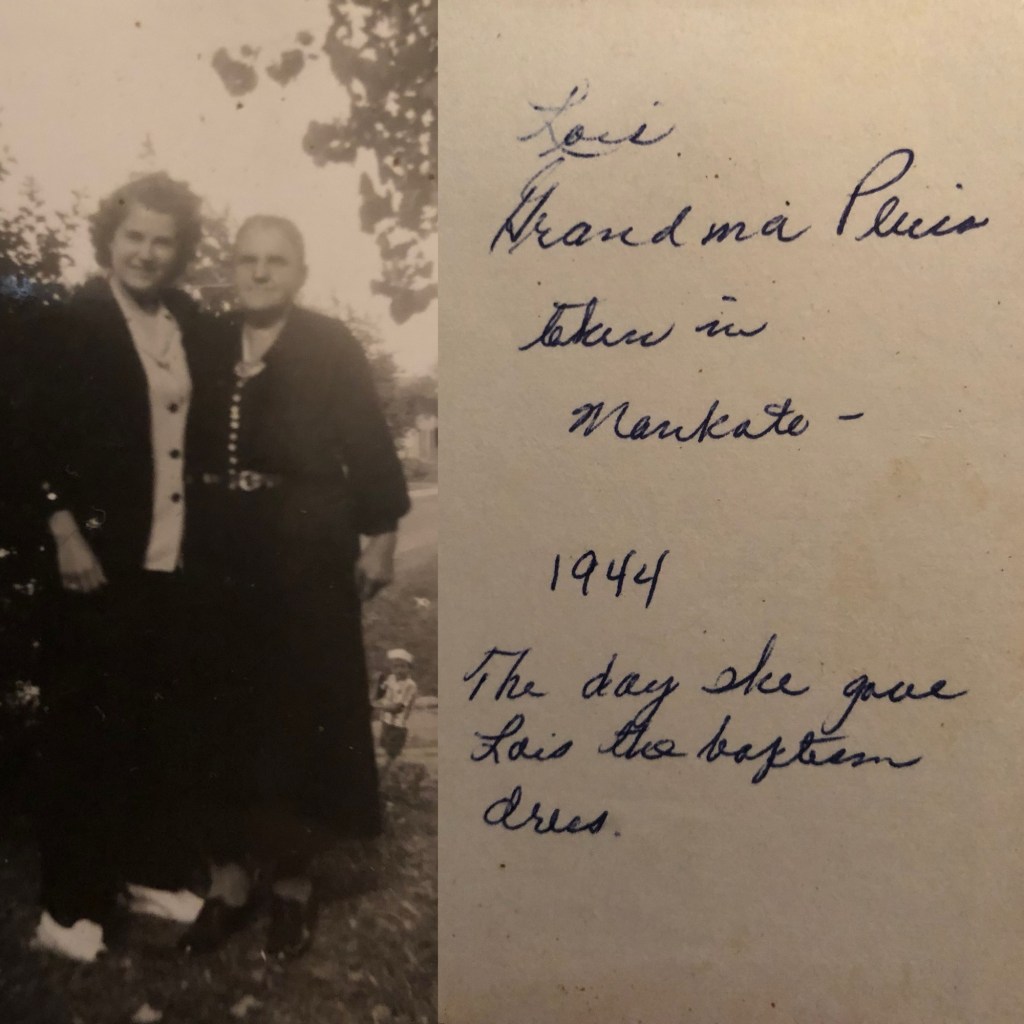
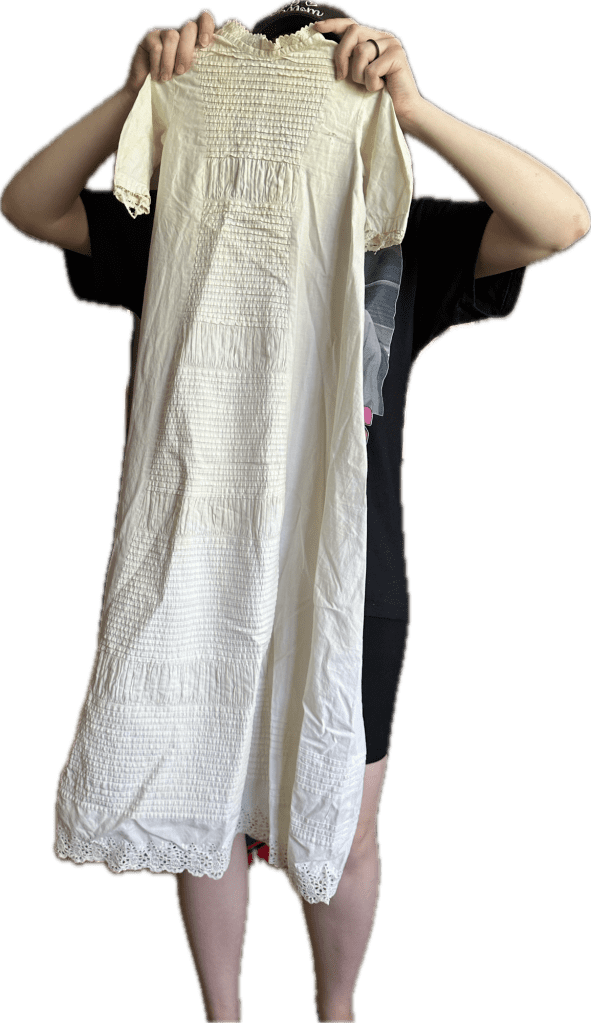
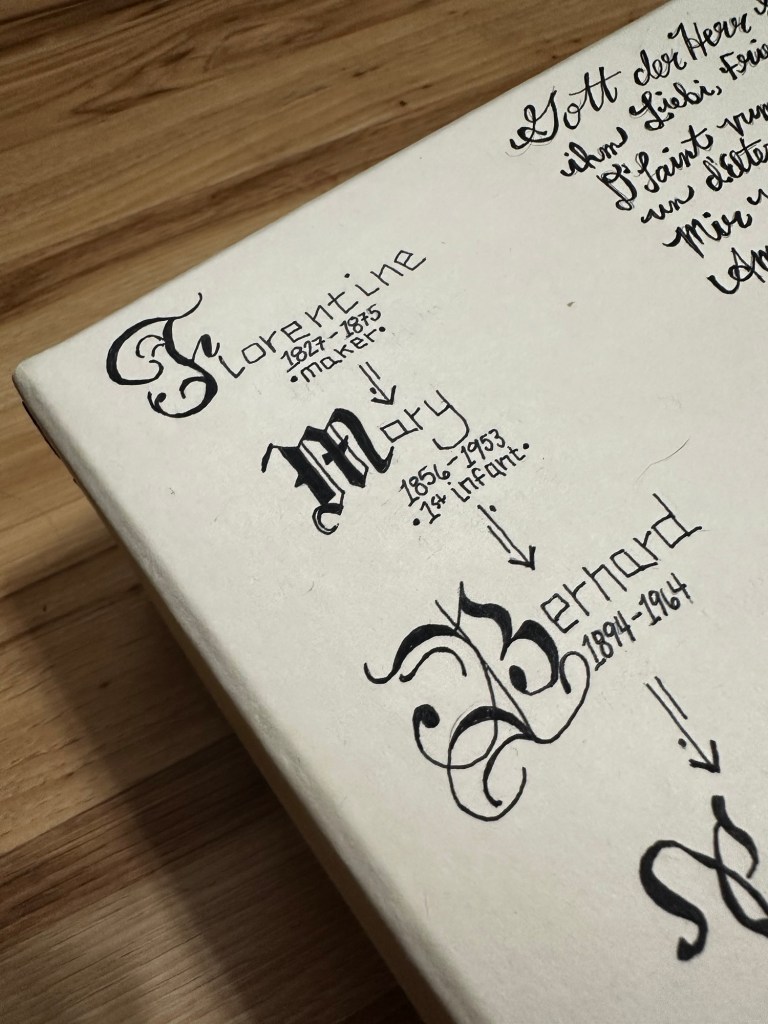
Nestled in a box wrapped with care lies one of my family’s most treasured heirlooms—a baptism gown over 160 years old, made in the small Alsatian village of Hohwiller, France. It was first worn by my great-great-grandmother, Mary Winterholt Pleiss, likely around 1856, and has since passed through generations of babies, across continents, and through countless family milestones.
But this gown is more than fabric and thread—it’s a time capsule.
Could This Gown Really Be from the 1850s?
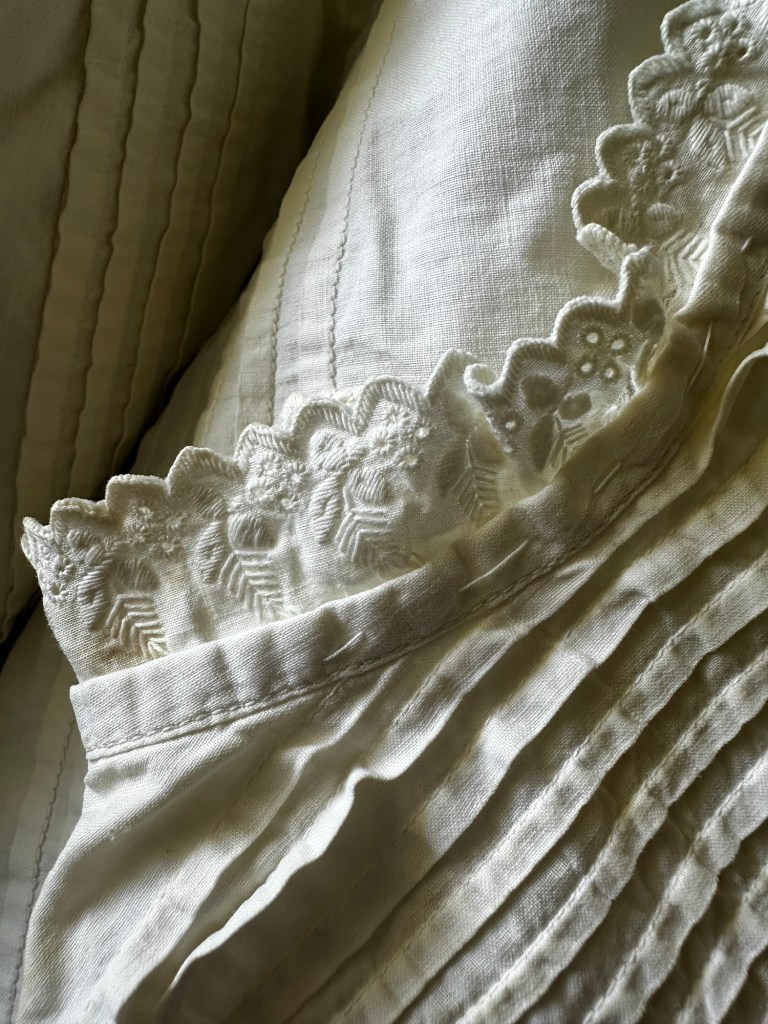
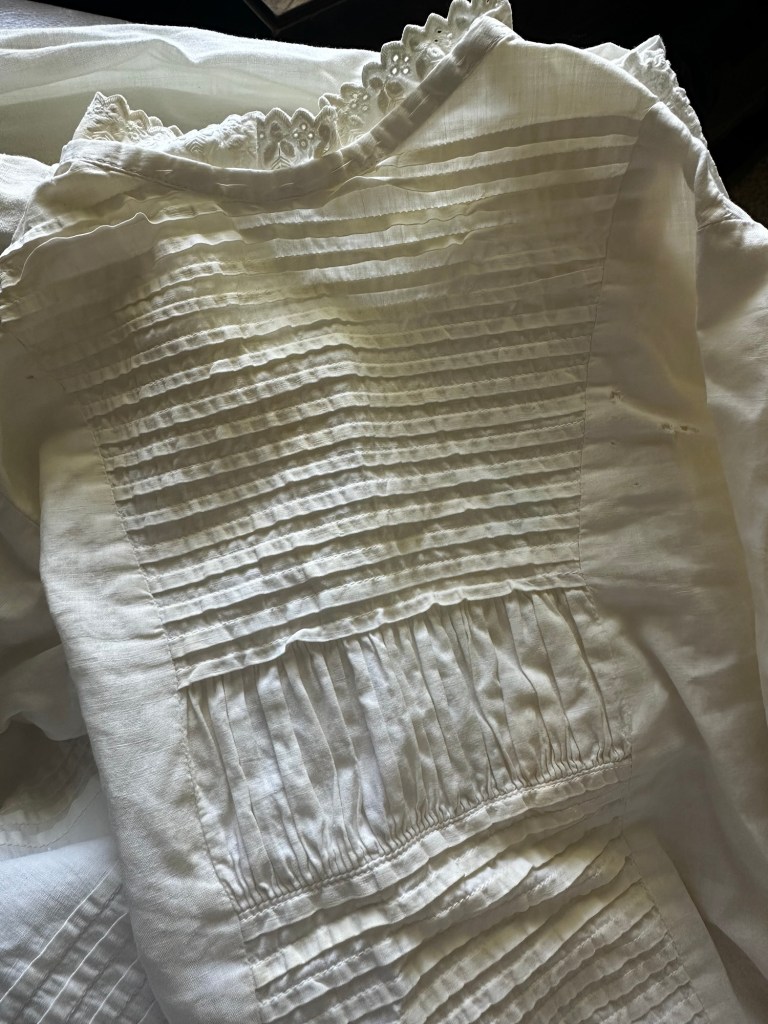
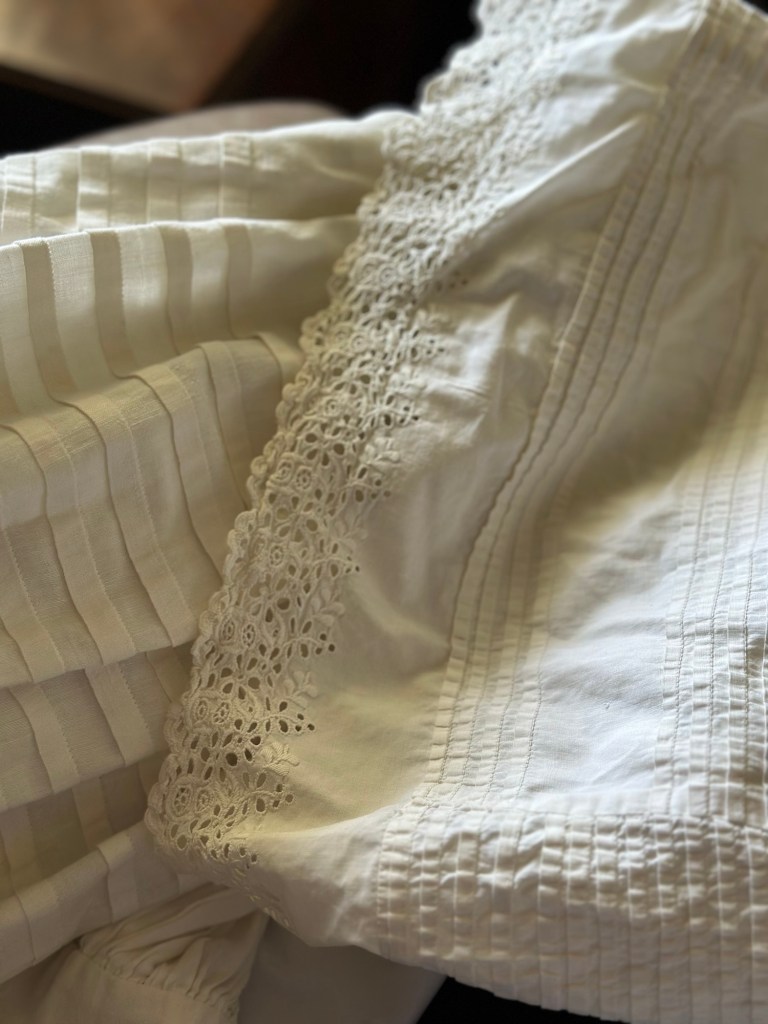
After studying its construction and materials, the answer is a resounding yes. This gown holds all the hallmarks of a mid-19th century Alsatian baptism dress:
- Pintucked bodice and skirt: The tightly sewn pleats were fashionable in the 1840s–1850s and required an expert seamstress.
- Broderie anglaise lace and floral embroidery: The detailed whitework, seen on the collar and hem, is consistent with rural French-Germanic traditions in Alsace.
- Lightweight linen or cotton weave: This fabric was commonly used for christening garments, prized for its purity and delicacy.
- Hand-finishing with possible early machine stitching: While sewing machines were still uncommon in homes, they had reached parts of Europe by the 1850s. This gown’s stitches show a blend—possibly hand-sewn with machine-assisted seams, which fits the time and region.
It’s astonishing to hold this piece and imagine the quiet hands in Hohwiller who hemmed it, the flicker of candlelight as it was pressed, and the joy it brought on baptism day.
Preserving the Past: How to Care for Antique Heirloom Gowns
Preserving a baptism gown like this isn’t just about keeping it intact—it’s about protecting the story it tells.
Here are some best practices:
1. Handle With Clean Hands (Or Gloves)
Natural oils can damage antique fibers. Wash hands first or use white cotton gloves.
2. Avoid Hanging or Plastic Bags
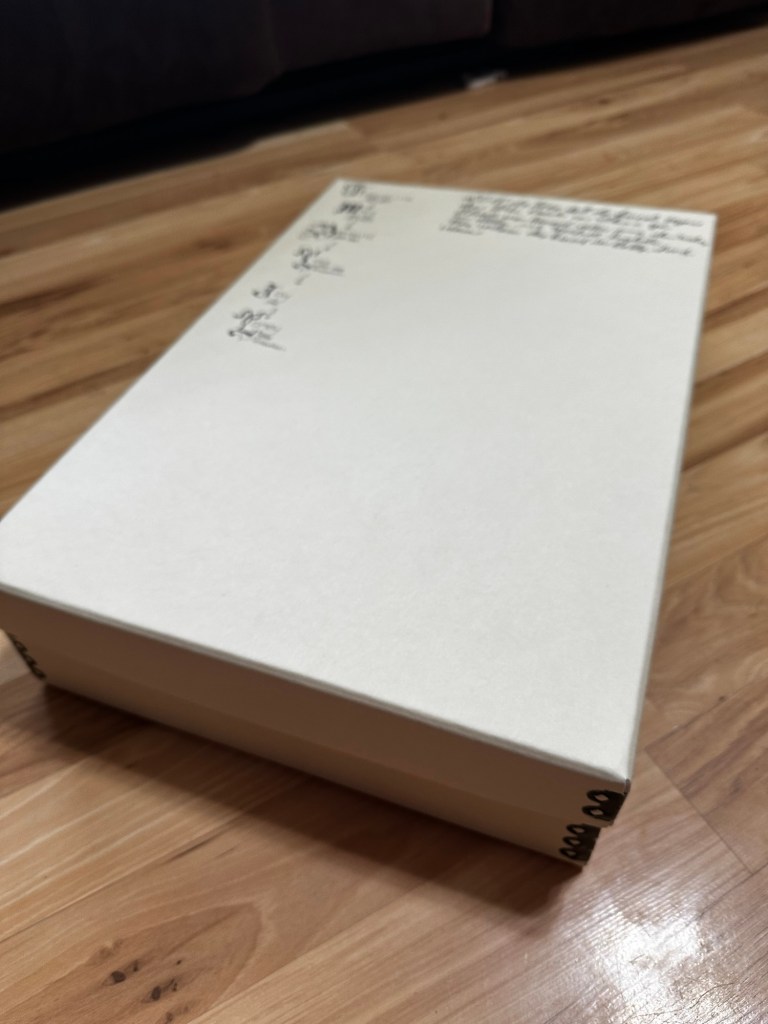
Hanging stresses the fabric. Store flat in an acid-free archival box with unbuffered tissue paper between folds.
3. Keep It in a Cool, Dry, Dark Place
Avoid attics, basements, or sunlit rooms. Temperature and humidity fluctuations weaken fibers.
4. Do Not Wash Without Expert Advice
Standard detergents can ruin antique fabric. If cleaning is absolutely needed, consult a textile conservator.
5. Document Its History
Inside the box, include a written note about who wore the gown, when, and any known details. Future generations will treasure that context.
More Than a Garment
Each stitch, tuck, and thread of this gown speaks to love, tradition, and continuity. It has crossed an ocean, survived wars, and wrapped generations of my family in grace. It’s not just a garment—it’s a legacy.
Do you have a family heirloom with a story? At Legacy Lane Genealogy, I help people uncover the histories behind their heirlooms, ancestors, and long-forgotten treasures. Reach out—I’d love to help you stitch together your family’s story.

 Legacy Lane Genealogy